
Admiring the Anthurium Papillilaminum Variegated
DATE : July 5, 2026 By : me-editor01
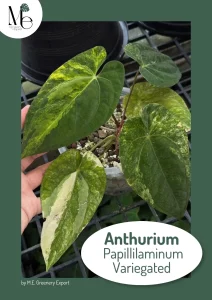
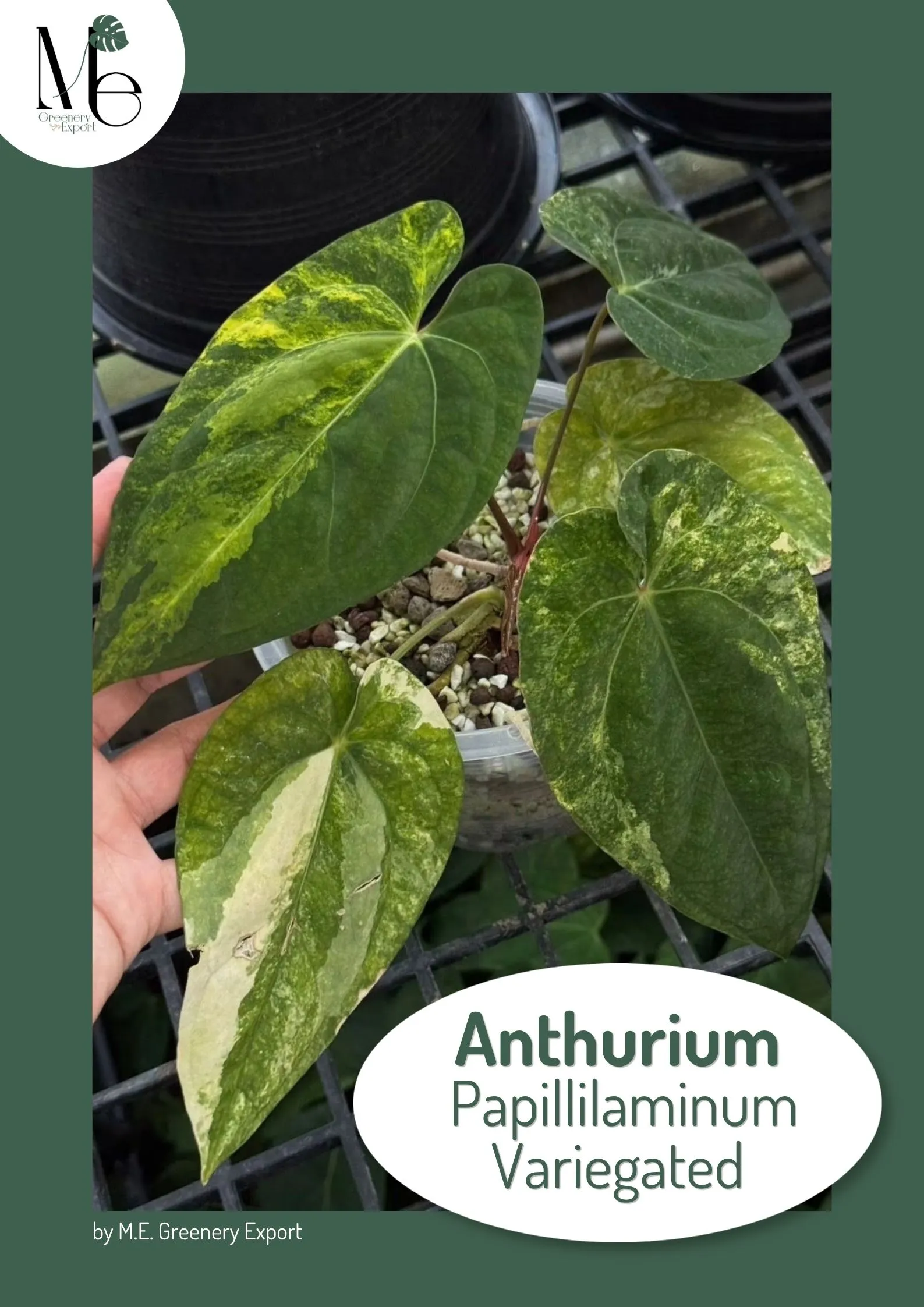
In the world of aroids, there are plants that fill a space and plants that define it. The Anthurium Papillilaminum is firmly in the latter category. With its elongated, sweeping lobes and a surface that feels more like suede than leaf tissue, it has a distinct, quiet presence. When you add the unpredictable nature of variegation to that signature matte finish, the result is something that stops you in your tracks.
This isn’t just about color. It’s about how light behaves on a leaf. The variegated Papillilaminum turns every new growth into an experiment, blending dark, velvety greens with streaks of cream or yellow that look hand-painted against the deep, absorbent texture of the foliage.
The Anatomy of the Leaf
What makes this plant hold a collector’s attention isn’t flashy colors, but the interplay of shape and feel.
- The Silhouette: The leaves are long and tapered, hanging with a slight, deliberate weight that gives the plant a graceful, downward-sweeping posture.
- The Velvet Finish: This is the plant’s defining feature. The surface is distinctly matte, lacking the gloss found in most common anthuriums. It absorbs light rather than reflecting it, which makes the variegated patches appear much more vivid.
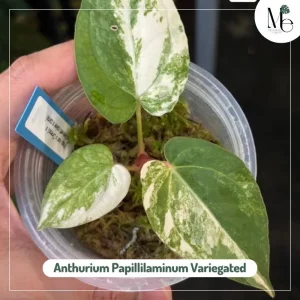
- The Variegation: These are not uniform patterns. You will see sectoral patches, speckled dustings, and marbled veins. It’s an irregular look, which means no two plants or even two leaves are quite the same.
Cultivating the Right Conditions
A plant with this much character requires a bit of attention to keep that velvet texture looking sharp and healthy.
- Light: Bright, diffused light is the goal. Direct sun is too harsh for the variegated sections and can quickly fade the deep, dark green of the base foliage. Aim for a spot where the light is consistent but soft.
- Humidity: This is essential for the papillilaminum. To keep the leaf tips from crisping, keep your humidity steady between 65% and 80%. An indoor greenhouse or a controlled environment often makes the difference between a struggling plant and a thriving one.
- The Medium: Think of how these grow in nature. They want air around their roots. A very loose, chunky mix heavy on bark, perlite, and long-fiber sphagnum will keep the root system oxygenated and happy.
- Watering: These appreciate a balance. The potting mix should stay consistently damp, but avoid letting it stay saturated. The “weight” of the pot is often the best indicator of when it needs more water.
If you’re thinking about adding one to your collection, here’s the deal with the market right now.
- Hard to Find: This is still a high-end specialty plant. Because it’s tough to propagate these quickly while keeping the variegation stable, there just aren’t enough to go around for the number of people who want them.
- What Drives the Price: It really comes down to the quality of the variegation. Plants with clean, stable, high-contrast patterns are going to cost a lot more than those with just a little bit of spotting.
- Know Your Source: Since these are big-ticket items, buy from growers or breeders you trust. You want someone who can tell you about the plant’s health and prove the variegation is actually stable.
- Value: While the general plant market goes up and down, the papillilaminum sits in its own niche. It’s a “collector-grade” plant that tends to hold its value because it’s so rare and unique.
Are you interested in the papillilaminum for its unique velvet texture, or is the complexity of its variegation what draws you to it?
Share this:


0 thoughts on “Admiring the Anthurium Papillilaminum Variegated”